Inkbrook Design: The Portfolio of Mackenzie Cameron
Resume | Portfolio | About Me |

Brazen had a problem. At the start of the pandemic, Brazen benefited from an explosion in demand for virtual career events, but, when in-person restrictions began to decline, the product team's primary goal became retention.
I spearheaded research and design to build a product solution that would provide enough value to get users to log in daily.
I worked with leadership, sales, and marketing to understand needs and goals, and I worked with Product Managers and Developers to get the best possible designs launched and delivered.
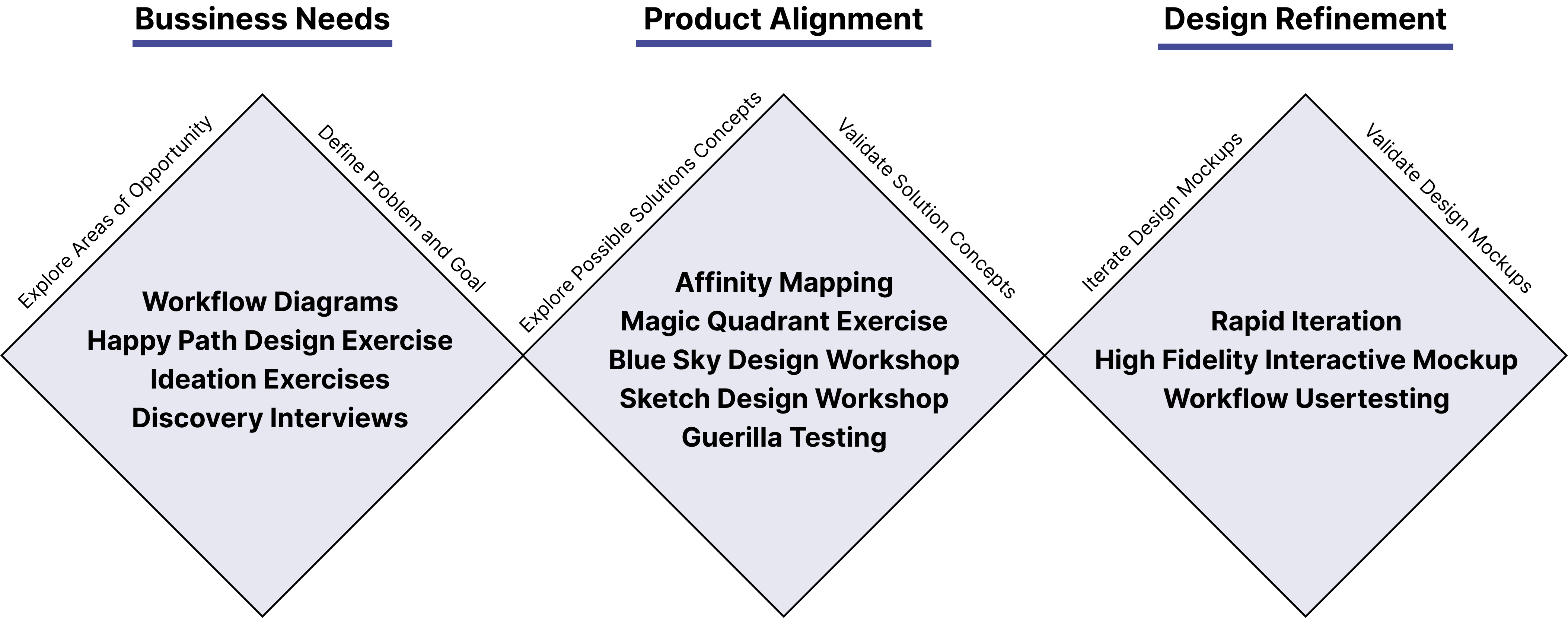
Brazen was built on an event-by-event framework, which meant data had to be aggregated manually, outside of our system.
I built out some user flows to clearly articulate to stakeholders where the existing workflows were time consuming, prone to human error, and in many cases did not even address users' primary needs.
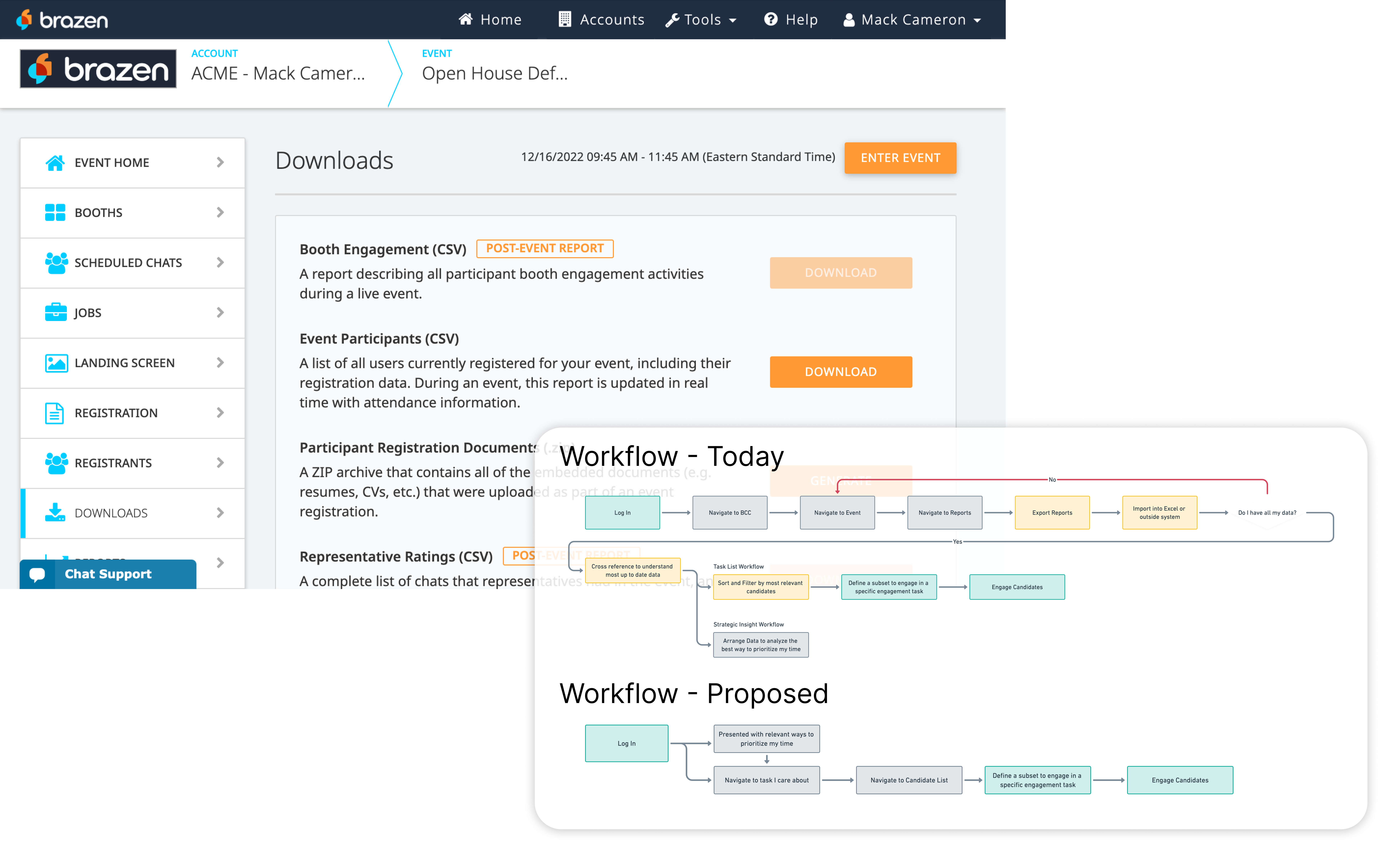
Different stakeholders had strong opinions about how to solve and prioritize a large constellation of related problems and opportunities. I brought cross-functional cohorts together through design exercises to transform their induvidual areas of expertise into actionable design artifacts.
Members of marketing, sales, product, and engineering teams highlighted the pain points they saw in a typical user workflow, brainstormed root cause, and refocused their narrow perspectives into a wider team-aligned objective.
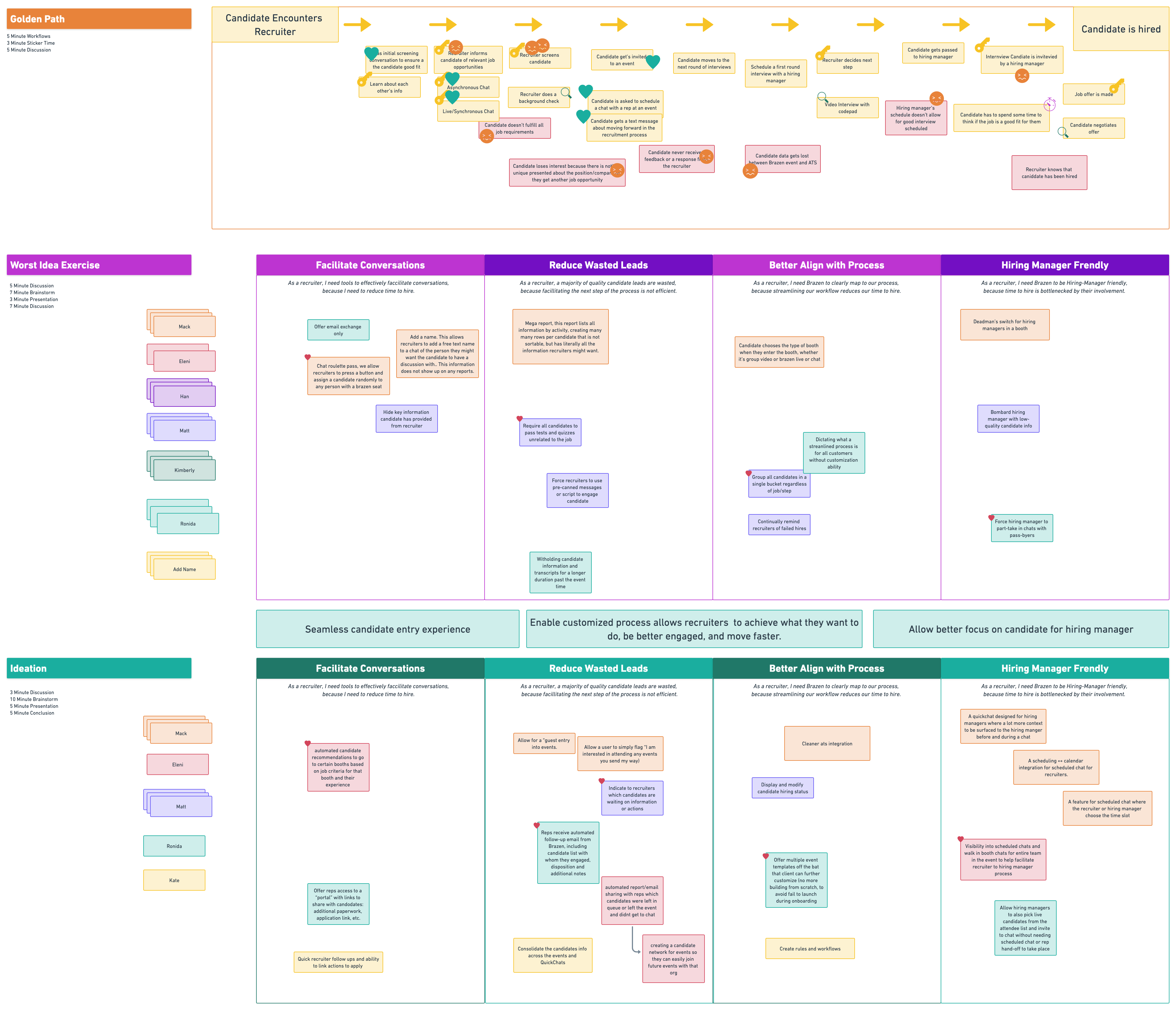
Golden Path
By highlighting what the desired workflow was, we were able to identify potential pain points that could become opportunties.
Worst Idea
By asking participants to brainstorm how the product could be made worse, I lowered participants "inner critic" to be more expansive.
Ideation
By asking participants to flip the "worst" ideas of other participants, we created a lot of interdisplinary conversations.
These exercises generated a lot of ideas and buy-in from leadership across departments, but the primary takeaway was to lead a discovery initiative with customers focused on talent acquistion and early stages of the recruiting life cycle.
With clear objective, I was able to run narrow discovery interviews directly with customers to build an updated body of feedback to better grasp the needs of recruiters.
I kept the questions tight, and followed up by asking managers to send qualitative surveys to their team of users. I used otter.ai to record the sessions and surface trends in the transcripts, but then brought the feedback into Miro for my own grouping and analysis.
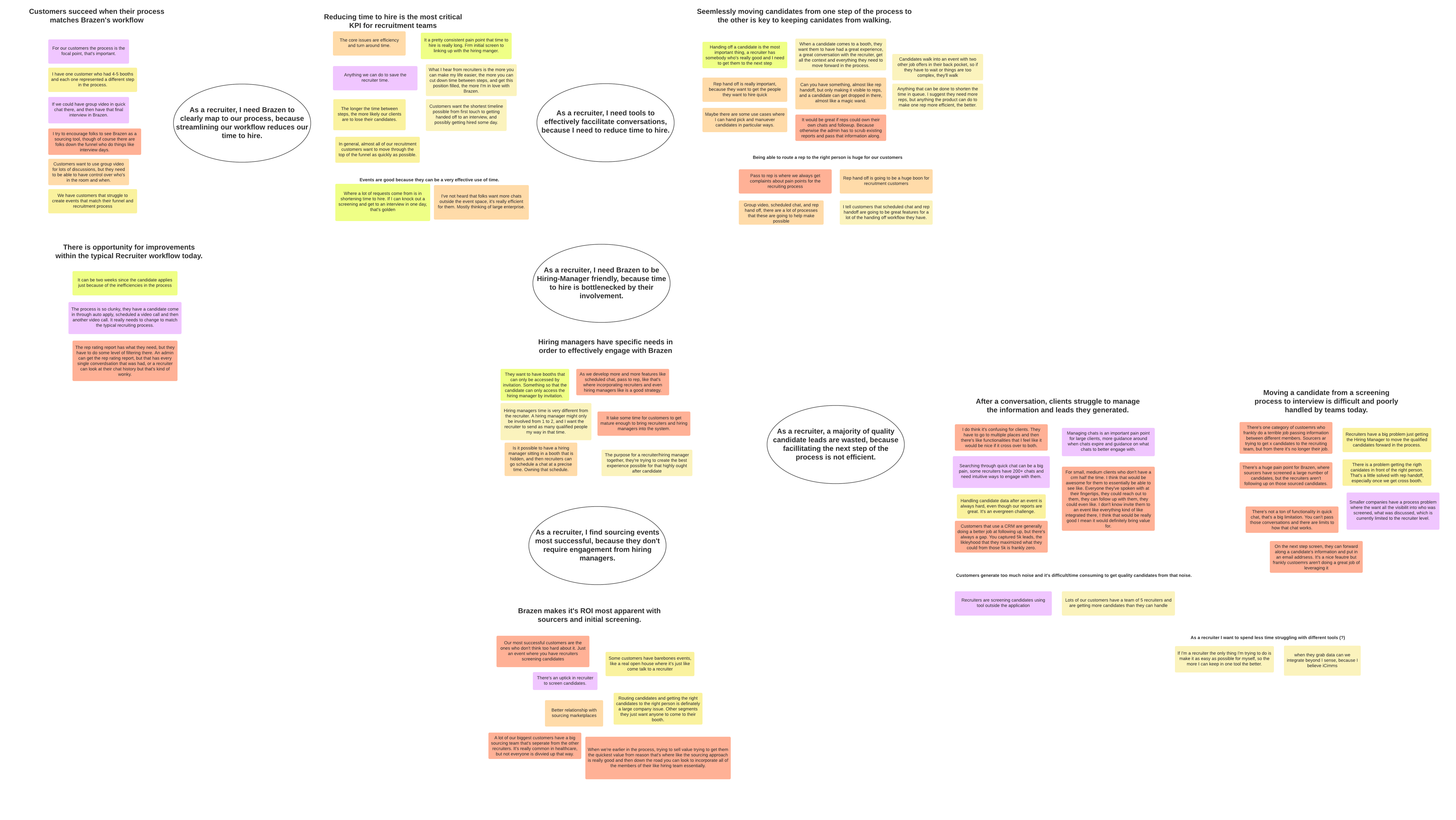
I transformed the wealth of data we collected into five well supported insights that could drive the next steps of the design process.
I organized and presented the research to a cross functional team, and leadership gave us approval to move forward.
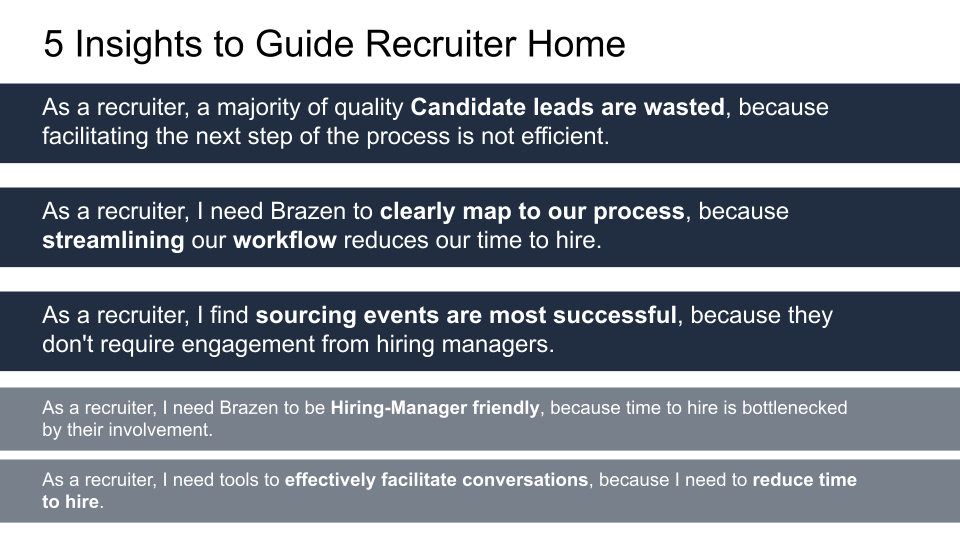
Three insights became the foundation for the product concept, and they validated and challenged some of our earlier assumptions. Customers cared more about reducing wasted leads than talent acquisition. They wanted streamlined processes, but it needed to match their workflows or else they'd do it manually outside our system anyway.
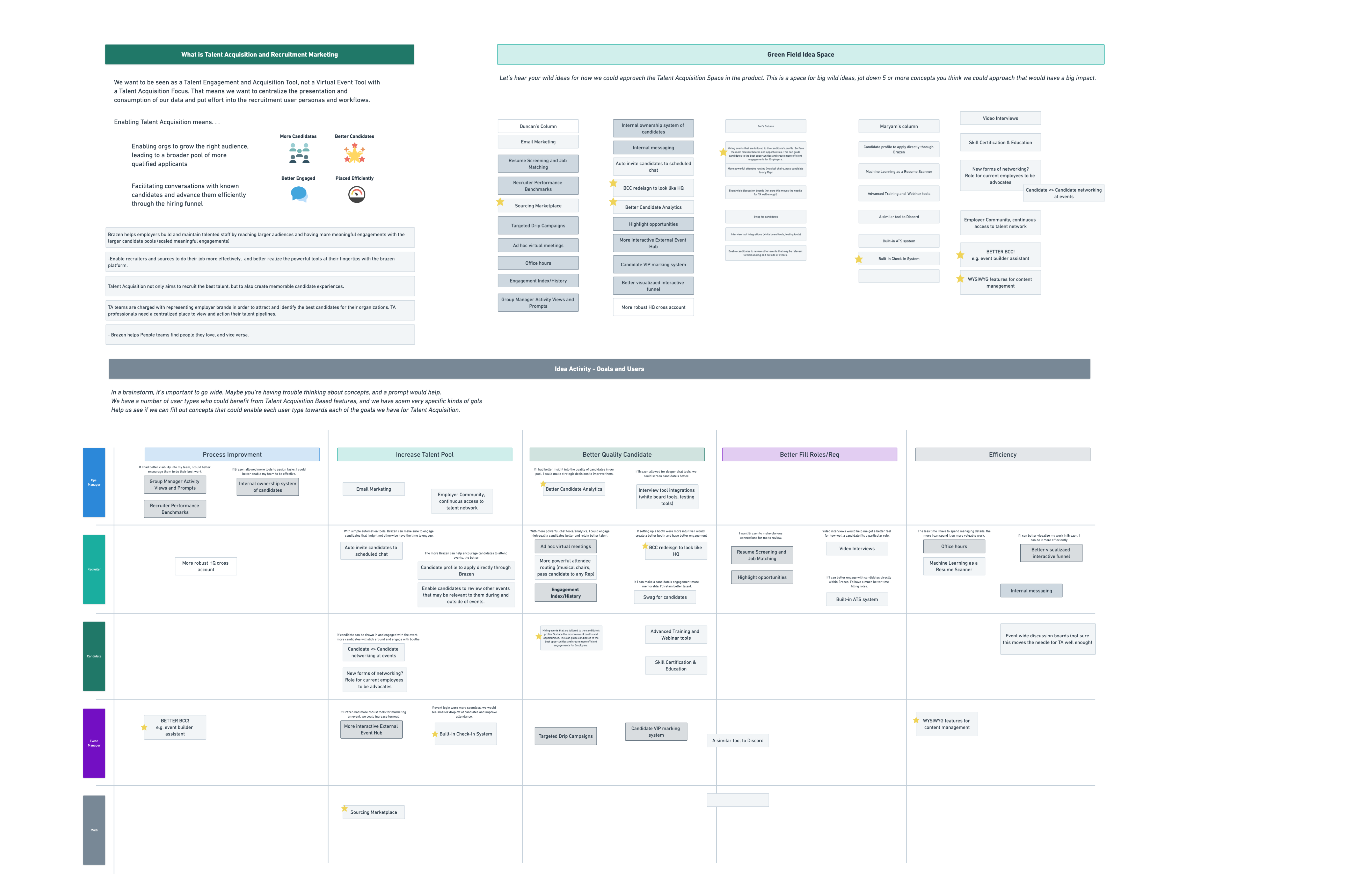
With a greenlight from our stakeholders, I held a brainstorming workshop with product managers to explore what solutions they felt were most important from their perspective and scope constraints.
We made a big list of features that had been discussed, highlighted pros and cons. We decided that starting with a candidate dashboard and list was the most important next step.
To kick off the initiative, I held a design session with the Product manager assigned to the project and the VP of Product to use some low fidelity components to build out some initial concepts combining pieces from the previous brainstorm.
It put us on the same page and gave us shared language to discuss the designs moving forward.
Recruiters who could see a specific subset of candidates across multiple events, could take actions without hiring managers to reduce wasted leads and bring our new workflow to their existing processes.
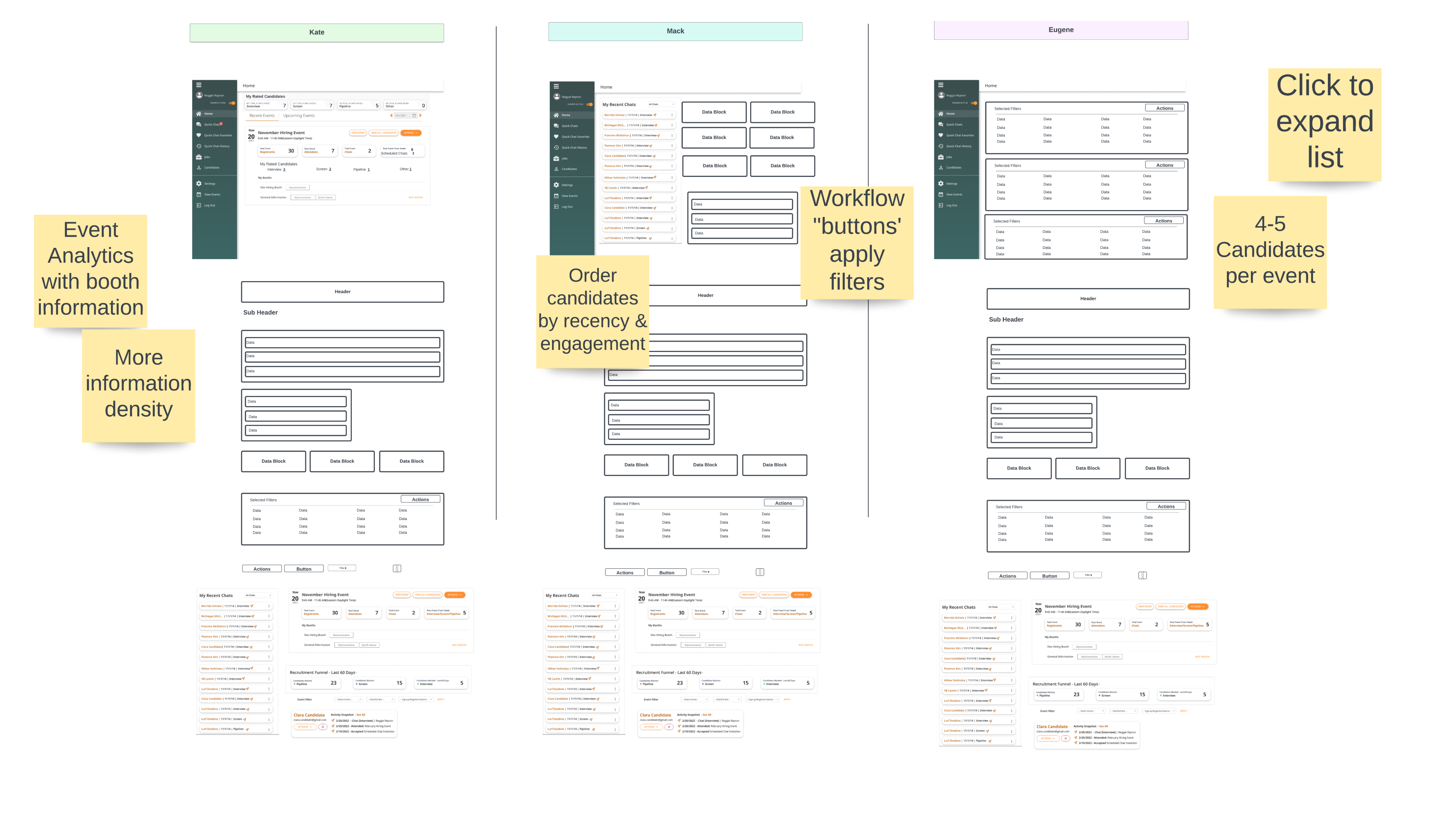
Recruiters should see a subset of candidates from multiple events they can rapidly take action on.
I took these initial concepts through a lightning fast cycle of design, validation, and improvement, to ensure the product could deliver on this central concept.
Starting with low-fidelity mockups, I explored the many possible ways the design could be approached, and through user testing with end users, managers, and subject matter experts I was able to change and refine the designs until we felt confident in a polished first draft.
Furthermore, throughout the process, I documented and discussed designs with developers to surface any technical limitations early in the process.
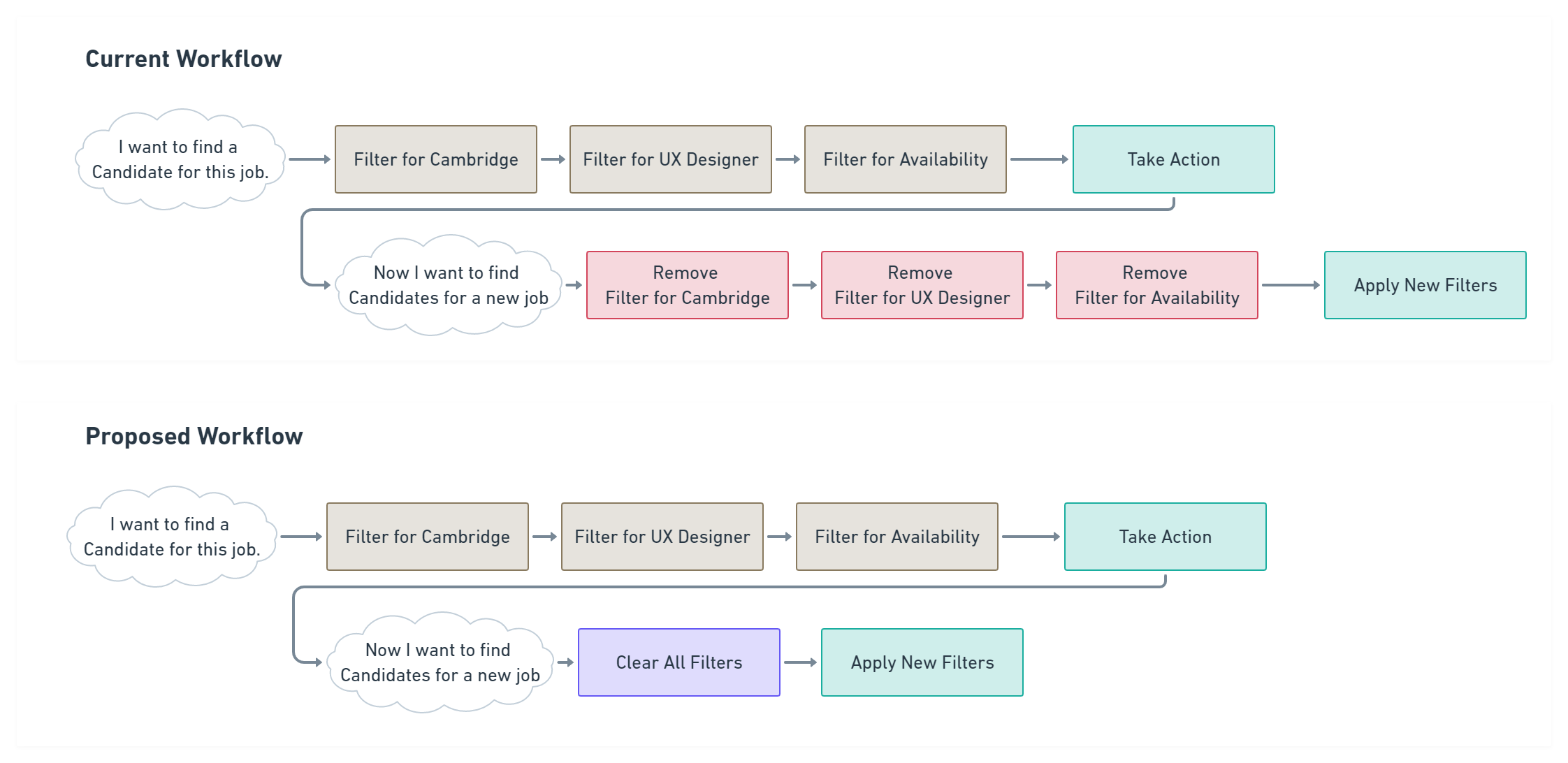
I worked with product management and engineering to define the specific feature set for our inital MVP, and built out high fidelity mockups to increase our confidence in the designs through extended usertesting.
We prompted users to walk through complete workflows with real data, and prompted questions about how specifcally they would use features in their typical day to day.
Our users were generous with their time, and I took full advantage of the feedback they delivered.
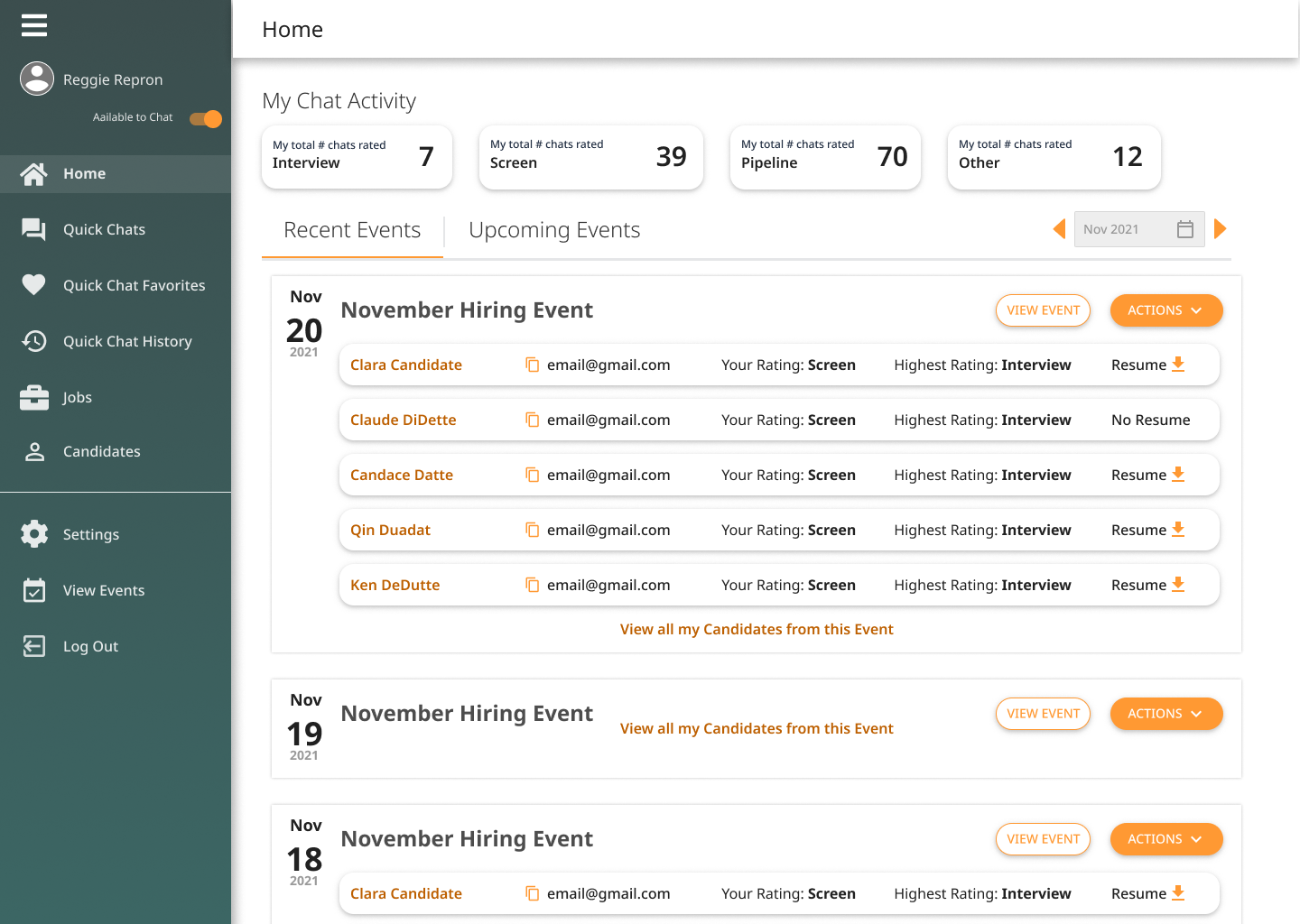
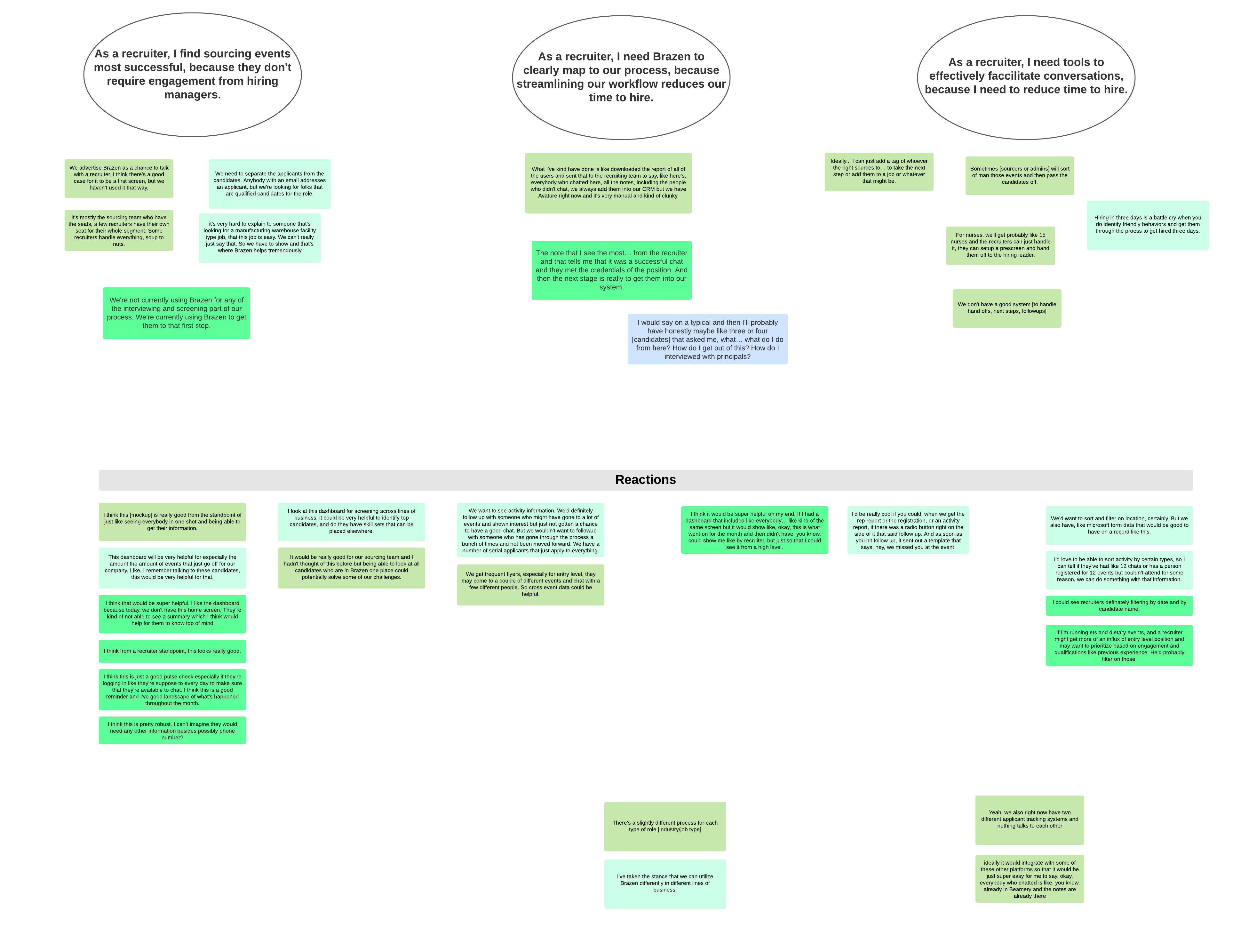
Every customer we talked to was wildly positive about the design, and excited for us to implement even a fraction of the features we offered. Which gave us good confidence to move forward with development.
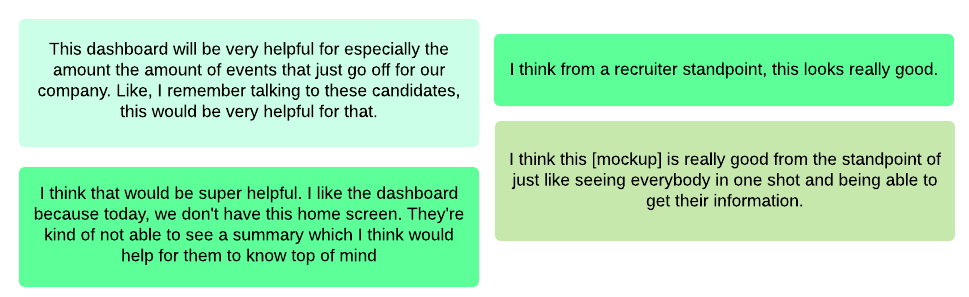
As we moved into development, I worked with developers to identify technical hurdles, and reworked designs, as necessary, to balance velocity with user experience.
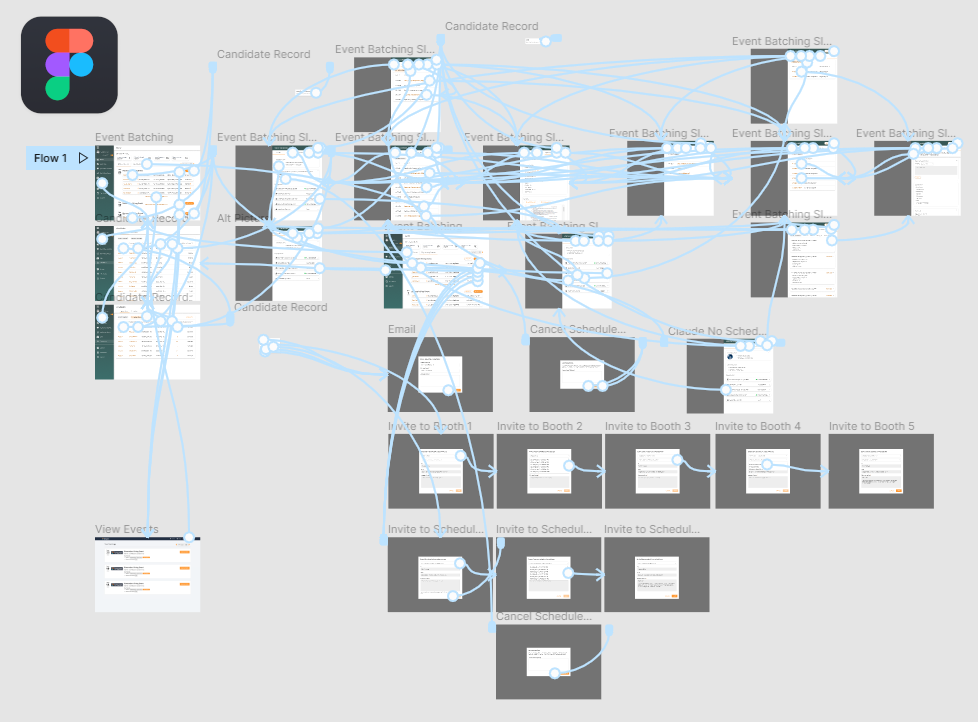
After multiple sprints of revisions, I felt confident in the design and managed multiple mockups and support documentation to help explain the features of the product to our internal teams.
Unfortuantely, my time at Brazen ended right when we began to roll out early access for this product. We had planned a rolling NPS survey to measure the impact of the intial MVP and subsequent followup features. I did follow up with a collegue about a year afterwards, who said that the metrics had been an instrumental part of the acquisition of Brazen by their now parent company, Radiancy.